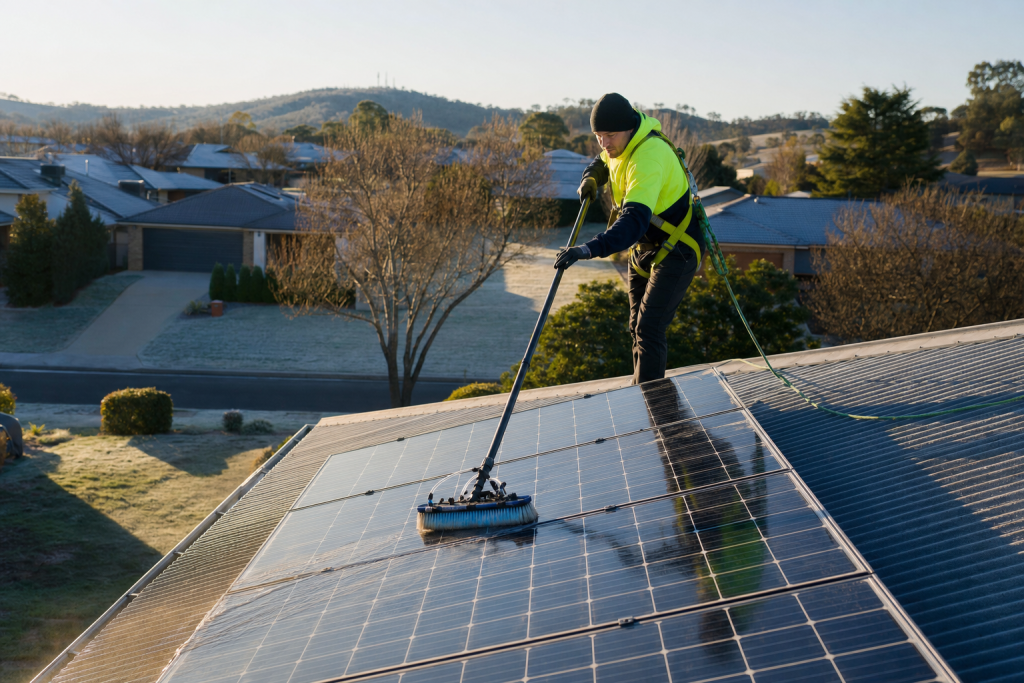
Solar panel cleaning in Canberra makes a noticeable difference to output, because the capital’s leafy suburbs leave a steady build-up of pollen, sap and lichen on the glass that blocks sunlight from reaching the cells. Frost, by contrast, doesn’t generally do any long-term harm to panels — though output does dip slightly while the surface is frosted over on those cold ACT mornings.
Canberra’s climate is a particular challenge for rooftop solar. Cold, dusty winters, heavy spring pollen and an abundance of established trees combine to coat panels in a film that the occasional rain shower simply can’t clear. The result is a slow, easy-to-miss decline in the power your system produces. The good news: a proper professional clean restores that clarity and brings your output back up. Here’s what’s really affecting your panels in the ACT — and the safest way to deal with it.
What Canberra’s climate does to your solar panels
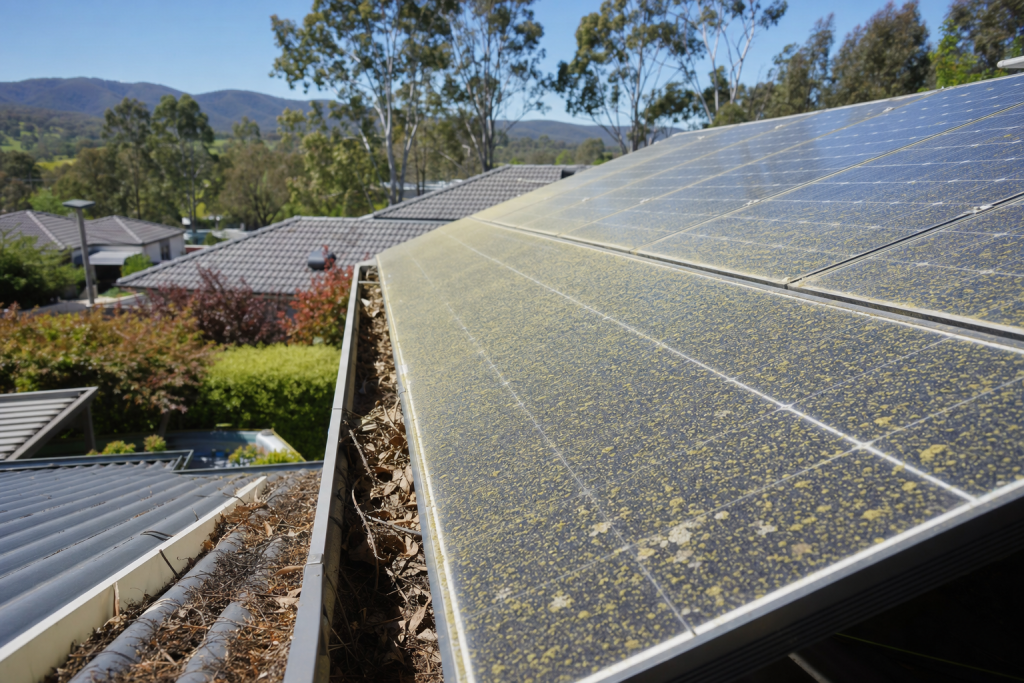
Living near so much greenery is one of Canberra’s joys, but it’s hard on solar panels. The things that build up on ACT panels include:
- Pollen — Canberra’s spring and early summer bring heavy pollen loads off the city’s many trees, settling as a fine film right across the glass.
- Sap and tree debris — sticky residue and leaf litter from overhanging gums and deciduous trees cling to panels and trap dust.
- Lichen and moss — in shaded, damp spots this living growth grips the glass and frame edges and won’t simply rinse away.
- Winter dust — Canberra’s dry, cold months kick up plenty of fine dust that settles on every flat surface, panels included.
Each layer scatters or blocks the sunlight your cells need, and because the loss builds gradually, most homeowners never notice until a clean shows them the difference.
What about frost?
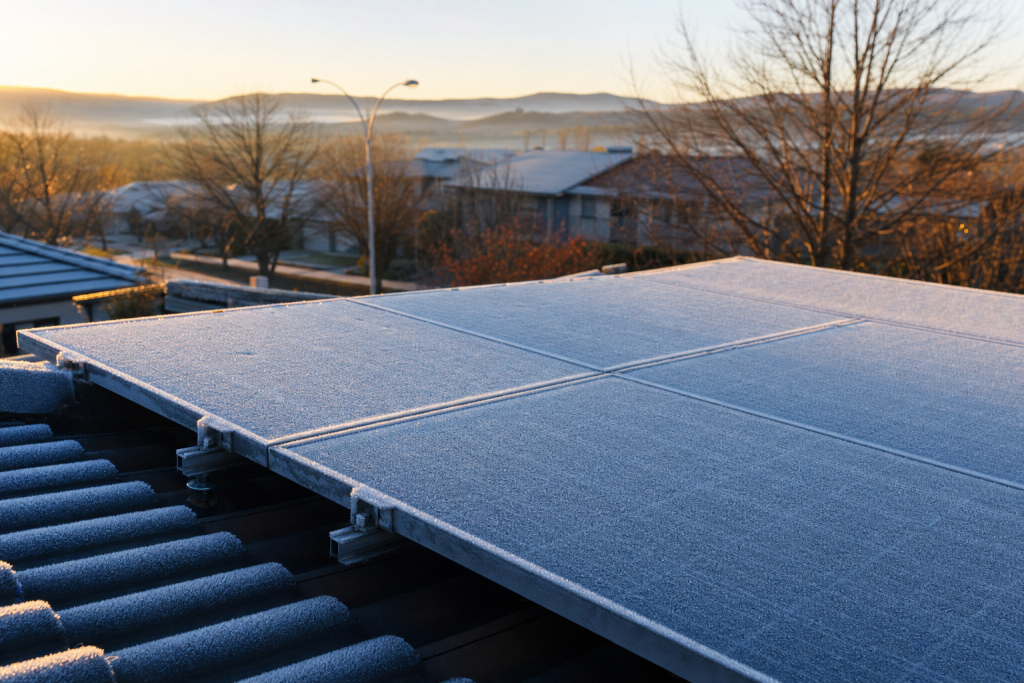
Frost is the question we get asked most by Canberra homeowners, and the answer is reassuring. Frost doesn’t generally have a long-term detrimental effect on your panels — they’re built to handle freezing temperatures. Output does drop slightly while the surface is frosty in the early morning, but it recovers on its own as the sun comes up and the frost melts. There’s nothing to clean off and nothing to worry about. The persistent output thief in Canberra isn’t the cold — it’s the pollen, sap and lichen.
| Build-up / condition | Canberra trigger | Effect on output | Recoverable by cleaning? |
|---|---|---|---|
| Pollen film | Spring, leafy suburbs | Gradual, widespread drop | Yes |
| Sap & tree debris | Overhanging trees | Sticky, traps more dust | Yes |
| Lichen / moss | Shaded, damp roofs | Persistent loss; won’t rinse off | Yes |
| Winter dust | Dry, cold months | Constant low-level loss | Yes |
| Frost | Cold mornings | Slight, temporary dip | Clears on its own |
The safe, streak-free way we clean Canberra panels
Solar glass is delicate, and the wrong approach — pressure washers, abrasive pads or harsh chemicals — can scratch the surface or void your warranty. Our method is gentle, thorough and built around safety.
We clean using a deionised, filtered-water pole-reach system. Because the water has had its minerals stripped out, it lifts pollen, sap and grime and then dries without leaving the chalky streaks that ordinary tap water leaves behind. Where access allows, we work from the ground using a carbon-fibre pole, keeping our team off your roof entirely.
When the roof does need to be accessed, we follow Australian WHS standards with quality ladders, harnesses and ropes. We assess the safest way to complete the job, not the quickest. Every clean comes with before-and-after photos, and we carry $20 million public liability insurance for complete peace of mind.
While we’re up there, panels and gutters often go hand in hand — leafy Canberra blocks that soil panels also fill gutters with the same debris. If yours need attention, see our gutter cleaning in Canberra service. For full details on our panel process, visit our solar panel cleaning in Canberra page.
How often should Canberra solar panels be cleaned?
For most ACT homes, a clean every 6–12 months keeps output healthy. Properties under heavy tree cover — common in suburbs like Yarralumla, Deakin and across the leafy inner south — often benefit from the shorter end of that range, especially after spring pollen and through the dusty winter months. If your generation figures have crept down in your app, that’s usually a sign your panels are due.
Get a free, accurate quote
Curious what a clean would recover for your system? We provide free, accurate on-site quotes — often using a drone inspection for an exact price rather than a guesstimate. We’ll call ahead before arriving, so you’re not stuck waiting around.
Get your free quote today at our quote page or call or text 0431 000 441. Same-day service is available across Canberra and the wider ACT.
Frequently Asked Questions

Alex
“A South Londoner who now calls Australia home, Alex brings over 20 years of trade experience to Urban Gutters. Before relocating to Australia, he spent more than a decade running his own gas installation and repair company in London, working across residential and commercial properties. Gutter and roof maintenance was a natural extension of that plumbing background, since water systems, drainage, and building envelope integrity all sit in the same trade family.
Alex co-founded Urban Gutters in Sydney in 2022 alongside his wife Kayla, after years of working for trade companies that consistently fell short on customer service. The brief was simple: build a gutter cleaning business where client satisfaction was the priority, not an afterthought. Urban Gutters now services both Sydney and Canberra, holding a 5-star Google rating and growing rapidly.
When he’s not on the tools, Alex is usually talking football or charming customers with the dry South London humour that earned him the nickname “Guvna” within the team.”