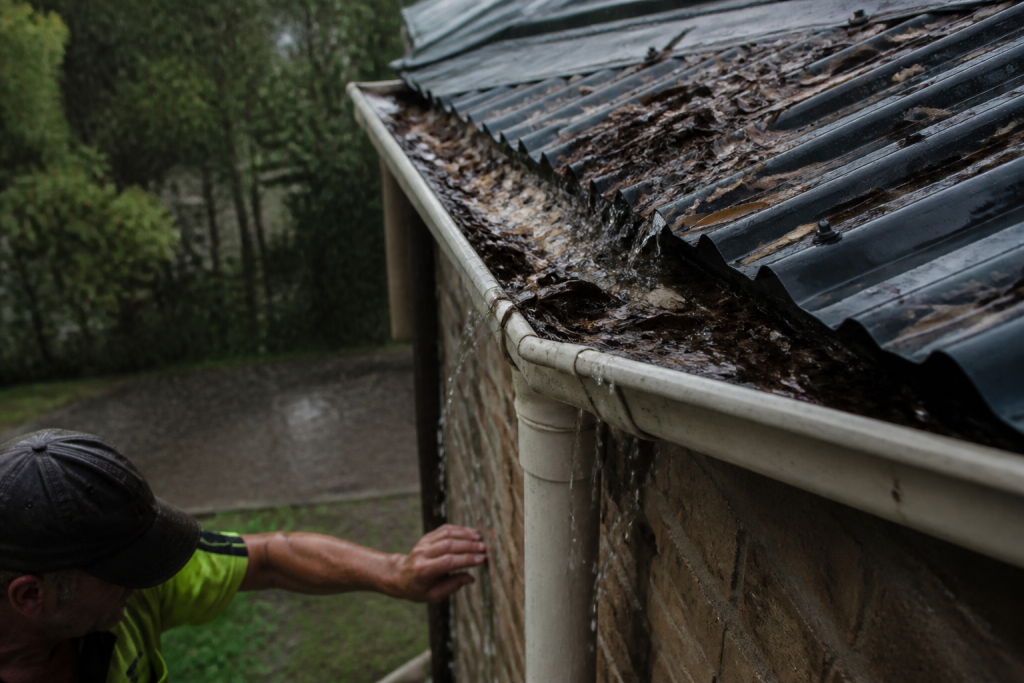
Blocked downpipes are one of the most common reasons gutters overflow — and the blockage can be anything from a build-up of leaves to a mis-thrown tennis ball. Left unchecked, the trapped water can cause damage to your home both inside and out. We clear most blockages by positioning our industrial vacuum at the opening of the downpipe, then flushing the line with a water hose to clear any remaining debris all the way through. Here’s how to spot the warning signs early and what to do about them.
Water is supposed to travel a simple path: off your roof, into the gutters, down the downpipes and away through the stormwater drains. When any stage of that path is blocked, water backs up — and that’s when problems start.
How a blockage moves through the system
Understanding the path helps you spot trouble before it becomes expensive. Here’s the journey water takes, and where it gets stuck:
- Gutters. Leaves, twigs, silt and seed pods collect along the gutter line. A full gutter can’t drain properly.
- Downpipes. Debris washes toward the downpipe opening and accumulates there. A blocked downpipe stops water leaving the gutter, so it overflows over the edge instead.
- Stormwater drains. Below ground, the stormwater drains carry water away from your property. When these block, water has nowhere to go — and that can lead to low-level flooding around your home.
A blockage at any one of these stages affects the whole system. That’s why we look at the full path, not just the visible gutter.
Warning signs homeowners often miss
Many blocked downpipes go unnoticed until heavy rain forces the issue. Watch for these earlier clues:
- Overflowing gutters during rain — often the first and clearest sign of a blocked downpipe.
- Water cascading down the outside of a downpipe rather than flowing through it.
- Damp patches, staining or peeling paint on external walls or under the eaves.
- Pooling water around the base of downpipes or near stormwater grates after rain.
- A gurgling sound or slow drainage from stormwater outlets.
- Mould or musty smells internally, which can signal water finding its way inside.
Catching these signs early matters, because the damage a blockage causes is rarely cheap to repair.
The risks of leaving a blockage
A blocked downpipe might seem minor, but trapped water is persistent. Blockages can cause water damage to the home both internally and externally — think rotting fascia and eaves, damaged walls, stained ceilings and, in the worst cases, water pooling against the foundations. Blocked stormwater drains add the risk of low-level flooding across your yard and around the home.
None of this happens overnight, which is the trap: the slow build-up is easy to ignore until a big downpour turns a small problem into a costly one.
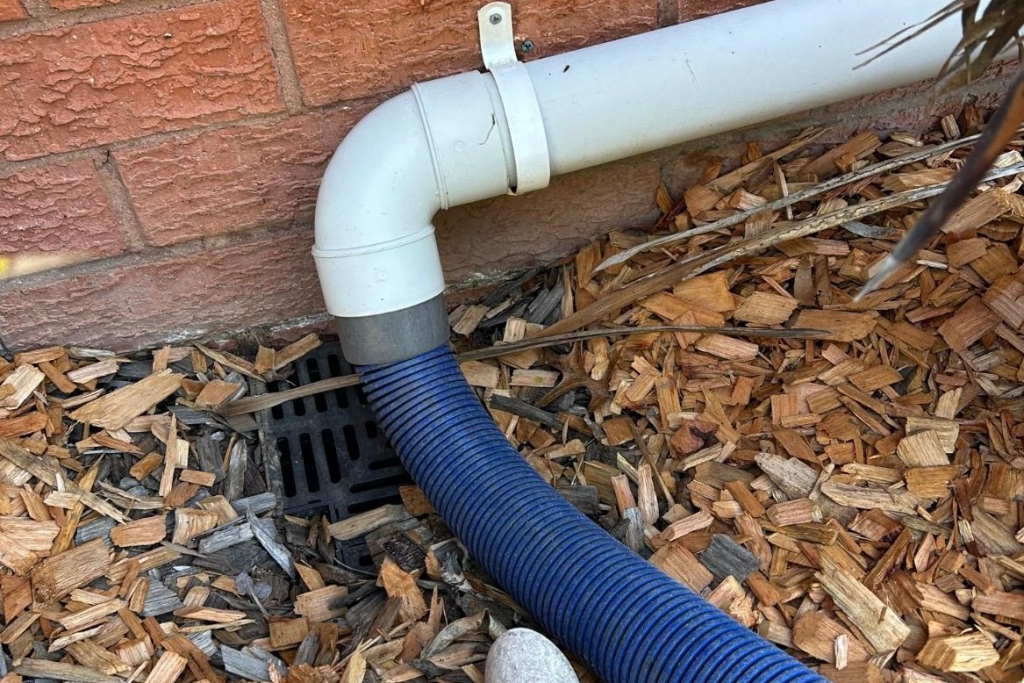
How we clear blocked downpipes and stormwater drains
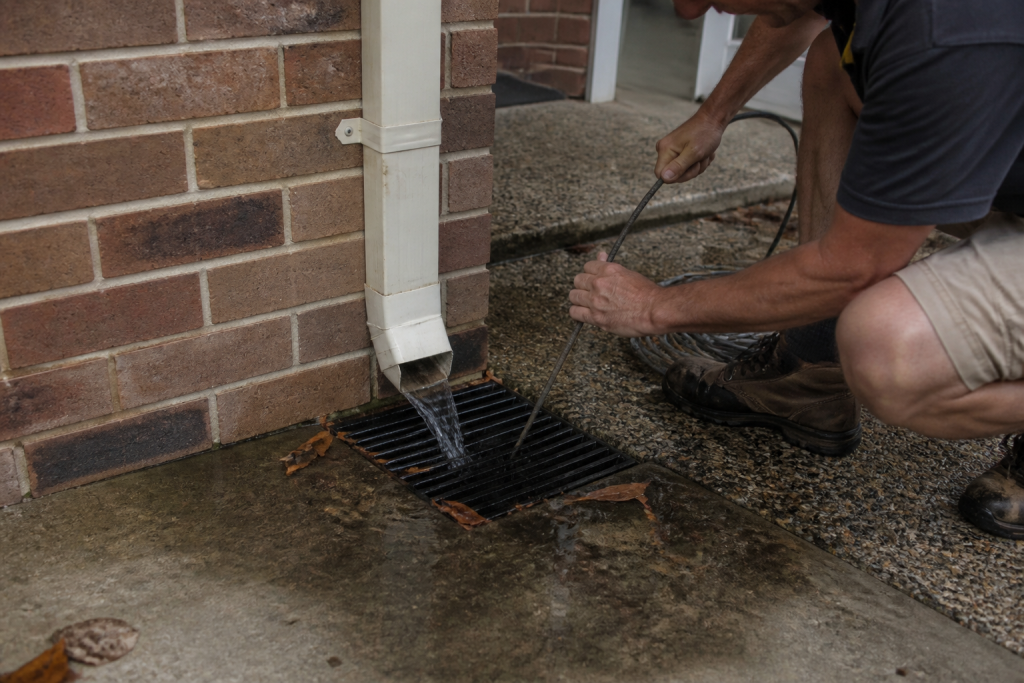
Our approach is methodical and thorough. We start by positioning our industrial vacuum at the opening of the downpipe, which clears most upper-level blockages by drawing the debris straight out. We then follow up with a water-hose flush to clear any excess throughout the length of the downpipe, confirming the water runs freely all the way through.
For stormwater drains, the same principle applies: regular checking and vacuuming is vital to prevent the kind of low-level flooding a blocked drain can cause. A quick seasonal check is far cheaper than repairing water damage after the fact.
You can read more about our blocked downpipe service in Sydney and our stormwater drain cleaning in Sydney — we offer the same services in Canberra too.
Blockage type, sign and fix at a glance
| Where it blocks | Common cause | Typical sign | How we fix it |
|---|---|---|---|
| Downpipe (upper) | Leaves, silt, stray ball | Overflowing gutters | Industrial vacuum at the opening |
| Downpipe (lower) | Compacted debris | Water down the outside | Vacuum + water-hose flush |
| Stormwater drain | Accumulated debris | Pooling, low-level flooding | Regular check and vacuum |
Why prevention beats repair
The cheapest blocked downpipe is the one that never fully blocks. Regular gutter cleaning keeps debris from reaching the downpipe opening in the first place, and a seasonal check of your stormwater drains heads off flooding before the wet season hits. As a family-run, WHS-compliant and fully insured business with $20 million public liability insurance, we’d always rather keep your system flowing than fix the damage afterwards — and we’ll send before-and-after photos so you can see exactly what was cleared.
Frequently Asked Questions
Get your system checked and cleared
Don’t wait for the next downpour to reveal a blockage. Get a free quote and we’ll clear and flush your downpipes and stormwater drains properly — or call our friendly local team on 0431 000 441.

Alex
“A South Londoner who now calls Australia home, Alex brings over 20 years of trade experience to Urban Gutters. Before relocating to Australia, he spent more than a decade running his own gas installation and repair company in London, working across residential and commercial properties. Gutter and roof maintenance was a natural extension of that plumbing background, since water systems, drainage, and building envelope integrity all sit in the same trade family.
Alex co-founded Urban Gutters in Sydney in 2022 alongside his wife Kayla, after years of working for trade companies that consistently fell short on customer service. The brief was simple: build a gutter cleaning business where client satisfaction was the priority, not an afterthought. Urban Gutters now services both Sydney and Canberra, holding a 5-star Google rating and growing rapidly.
When he’s not on the tools, Alex is usually talking football or charming customers with the dry South London humour that earned him the nickname “Guvna” within the team.”